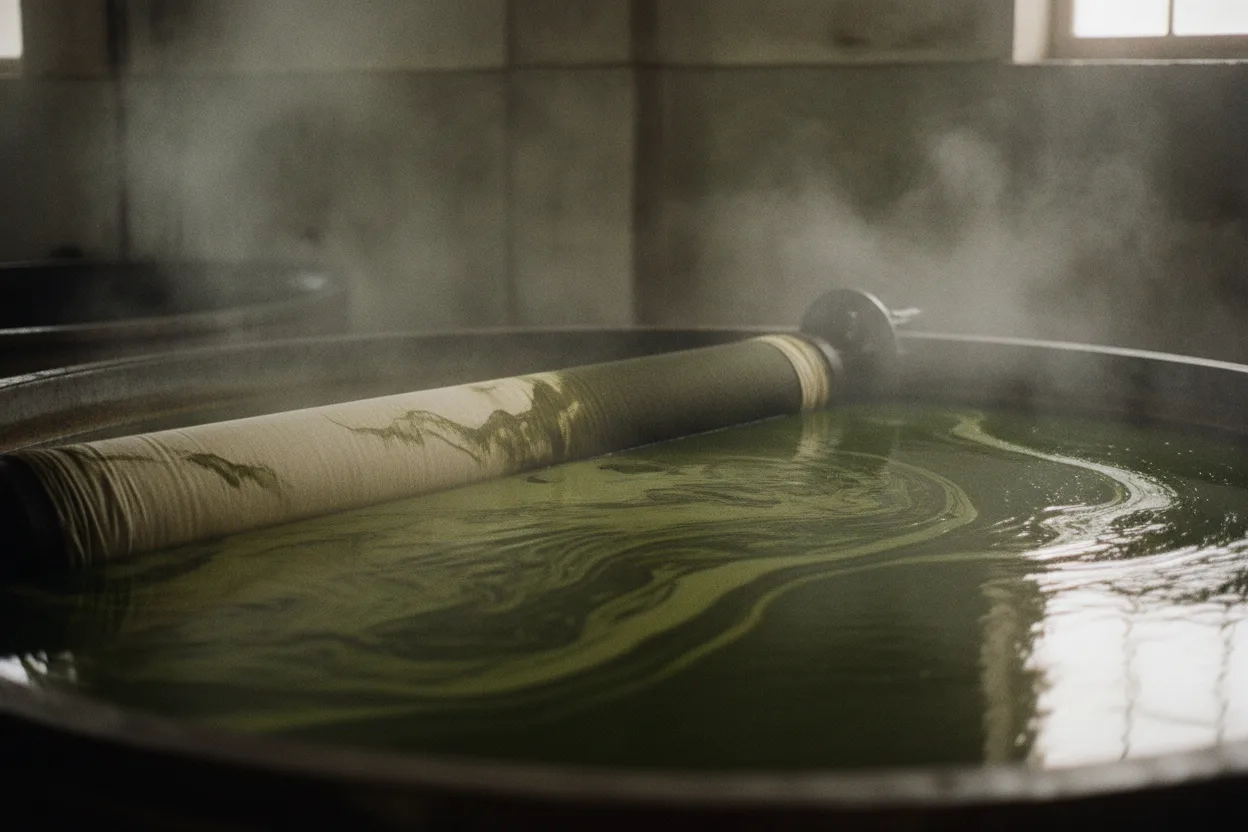
Why we dye the garment, not the cloth
Garment dyeing costs more and takes longer than dyeing the cloth first. It is also the only way we can hold a Pantone reference across a reorder nine months later.
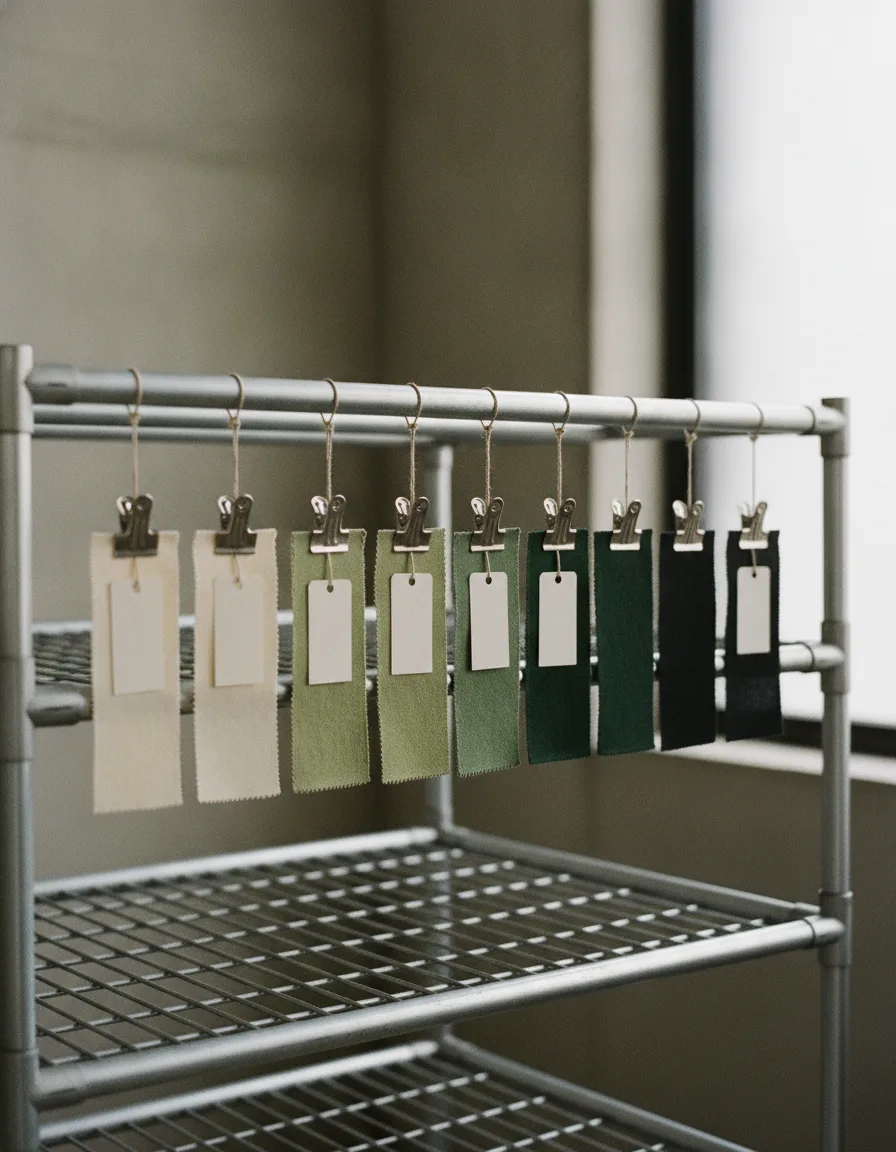
There are two moments in a garment’s life where colour can go in. You can dye the yarn or the cloth before anything is cut, which is how most merch is made, or you can make the garment in raw ecru and dye the finished piece. We do the second, at a dye house in Barcelos, and it is the single decision that most changes what arrives on your pallet.
What goes wrong with piece dyeing
Dyeing the cloth on the roll is fast and cheap. The problem shows up later. A roll is dyed, cut into panels, sewn, washed and pressed, and each of those steps moves the colour a little. Sew two panels from the ends of the same roll into one hoodie and the body can read a half-step deeper than the sleeve. Nobody notices on a photograph. Everybody notices on 200 pieces laid out on a table at an event.
The second failure is the one that costs money. Nine months later you reorder. The mill has a new yarn lot, the dye house has a new bath, and the reference you approved is a swatch in a drawer. The second run comes back close, and close is what people mean when they say a supplier is unreliable.
What garment dyeing does instead
We make every blank in raw ecru and hold it in Porto. The garment is fully constructed — seams, ribs, woven label, the lot — before it ever meets colour. Then the whole piece goes into the bath. Body, sleeve, cuff and collar take the dye in the same lot at the same time, so they cannot disagree with each other.
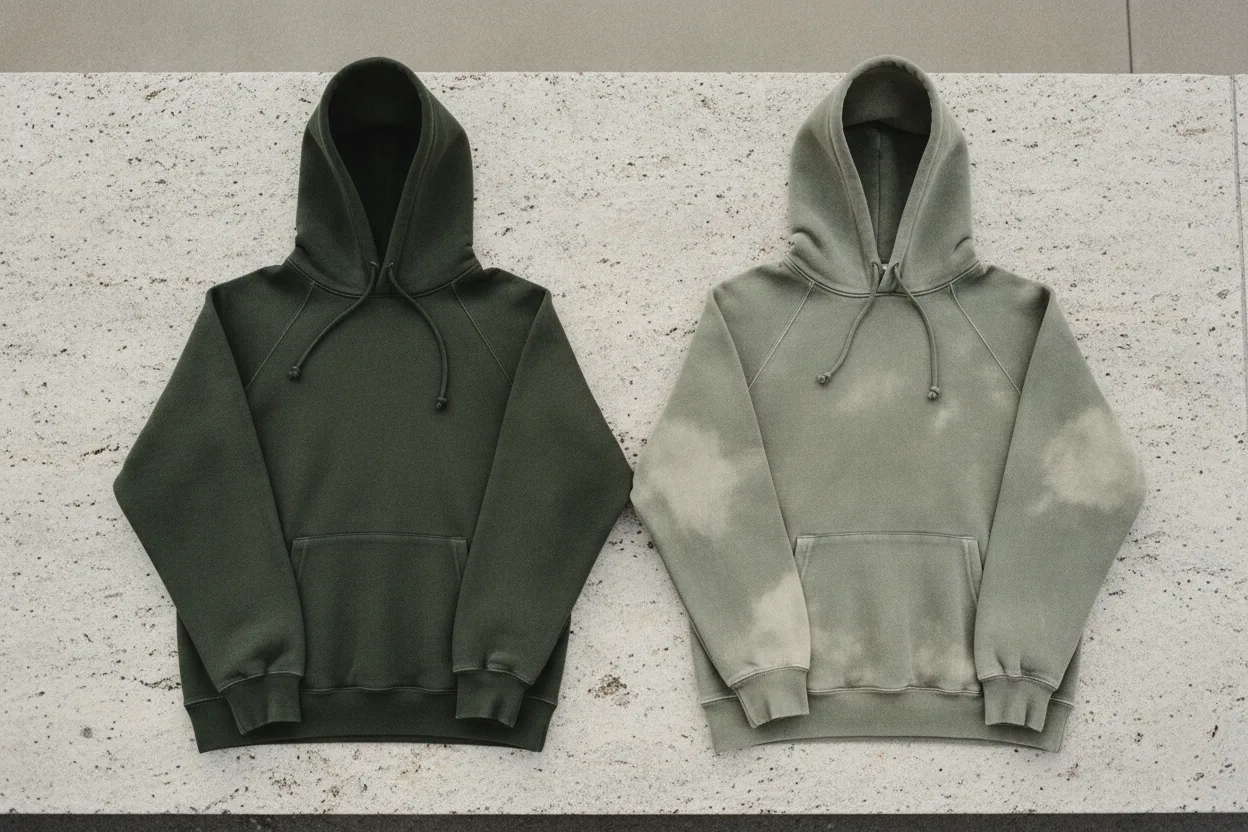
The colour also sits differently. Seams and stitch lines take dye at a slightly different rate from flat cloth, which gives a garment-dyed piece a small amount of depth around the shoulder and cuff. It is the reason a garment-dyed hoodie looks worn-in on day one and a piece-dyed one looks flat.
How a lab dip works
You send a Pantone reference, or a physical swatch, or an existing garment. The dye house mixes a recipe, dyes a small piece of the actual cloth your run will use, dries it, and reads it under D65 daylight. Reading it wet or under a shop light is how people end up arguing about a colour that was always correct.
A lab dip takes 2–3 working days and usually comes back right first time. If it does not, we adjust and go again. That loop is short because Barcelos is a van ride from the studio rather than a container ship from somewhere else.
Three things worth knowing before you send a reference
- A Pantone reference printed on paper and the same reference on 500 g/m² fleece are not the same colour. Cotton has a nap; paper does not. We match to the cloth, and the lab dip is what you approve.
- Deep shades on heavy cloth take longer in the bath. A vat olive on 500 g/m² fleece adds a day or two over the same shade on a 240 gsm tee.
- Pale shades show cloth variation more than deep ones. If your brand colour is close to raw ecru, ask for two lab dips rather than one.
Why the reorder matches
Once you approve a lab dip, the recipe is written down against your Pantone reference and kept on file with the lot record. A reorder is not matched to the reference again from scratch — it is matched to your first lot, with the approved dip physically alongside it in the reading box.
That is the whole promise, and it is why the extra cost is worth paying. The colour on the second run is measured against the thing you actually held, not against a number.
What it costs you
A custom Pantone dye lot adds 2.10€ a piece and a 120€ setup charged once, and it is the step that sets the 14–21 day production window. Order from the eight house dyes and you skip the lab dip entirely, because those recipes are already on file.
From reference to dispatch
Send a reference and the first lab dip is on its way the same week. MOQ is 25 pcs on any dye, house or custom.
- Reference
- Any of 2,625 Pantone refs
- Lab dip
- 2–3 working days
- Reading
- D65 daylight, dry cloth
- Dye stage
- After making, whole garment
- Bath
- Closed loop, water recovered
- Shrinkage
- Taken out before dispatch, 0–3%
- Recipe
- Held on file against your reference
- Lead time
- 14–21 days from approval
More from the journal
All piecesThe cloth
What 270 gsm actually feels like
Weight is the number every merch supplier quotes and the one nobody can convey on a screen. A short guide to reading gsm before the sample lands.
24 July 2026 · 5 min read
Production
Why the second run never matches
Colour drift, block drift and yarn lot drift are three different problems. Only one of them is the dye house.
9 June 2026 · 7 min read
Finishing
Screen print or embroidery
A one-colour mark on 500 pieces and a four-colour mark on 25 are different jobs. How the setup cost decides which finish is right.
18 April 2026 · 4 min read